A Yoke for Two
-
David Bentley Hart Version:
But to what shall I liken this generation? It is like children in the marketplace who, accosting the others, say 'We played flutes for you and you did not dance; we wailed in lamentation and you did not beat your breasts.' For John came neither eating nor drinking, and they say 'He has a demon.' The Son of Man came eating and drinking, and they say, 'Look: a gluttonous and wine-besotted man, a friend of tax-collectors and sinners.' And Wisdom has been vindicated by her works.At that time, Jesus spoke out and said, "I give you fullest thanks, Father, Lord of heaven and earth, because you hid these things from the wise and sagacious and revealed them to infants; Yes, Father, because such was pleasing before you. All things were delivered to me by my Father, and no one knows the Son except the Father, and neither does anyone know the Father except the Son and anyone to whom the Son wishes to reveal him. Come to me, all who toil and are burdened, and I shall give you rest. Take my yoke upon yourself and learn from me, because I am gentle and accommodating in heart, and you will find rest for your souls. For my yoke is mild and my burden light."
Two markets
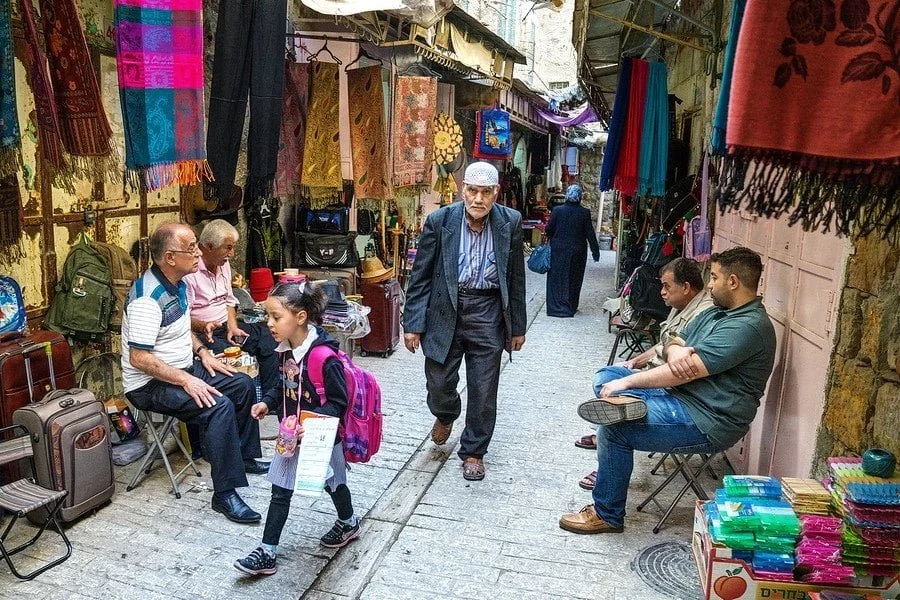
In the old cities of my part of the world, the market sits at the centre. Not at the edge, not in a parking lot out by the highway, but at the very heart, where the stone has been worn smooth by generations of feet. The سوق (sūq) is where life happens. You go out for tomatoes, and you come home having learned who is engaged, who is unwell, and who has come back from abroad. The spice seller asks after your mother’s health. And the children are there, always there, weaving between the crates, because the market is their backyard. They come because it is where their people are.
That is the world Jesus stands in when he speaks of children in the marketplace. It is dense, human, unscheduled, and full.
Now think of how most of us buy our food here. We drive to the supermarket, take a ticket at the deli counter, move through the aisles, pay a stranger at a till, and leave. It is efficient and quiet, and most of the time no one learns anything about anyone. The place where life used to spill over has become a place where a transaction is completed and nothing more. The children are not there in the old way. And neither, most of the time, are we.
In some ways our Farm-to-Plate Market Place is worth pausing over, because it keeps something the supermarket lost. Yes, you can collect your produce and go. But most people stay. They chat. They catch up. They ask after one another. It is not only a place to buy food; it is a place where a community leans against itself on purpose. And we have built care right into it: you pay for your produce, you pay a participation fee, and a little more if you can, so that a neighbour who needs a subsidy can eat at the same table. That is the sūq model.
The two songs
In the marketplace, the children are playing the two games every child in such a place learns to play. They play wedding, with the flute and the dancing. They play funeral, with the wailing and the beating of the breast. They have been to the weddings. They have been to the funerals. They carry the two songs of their community in their small bodies, and they give them back in their play.
Those two games are the two songs a whole community lives by. When one of us is married, we dance; when one of us is buried, we mourn. And no one learns those songs in a classroom. You learn them the way the children in the sūq learn them, by being carried to the wedding and the funeral, absorbing the rhythm of your people into your body before you could ever explain it. It is knowledge caught rather than taught. It is the knowing of the little ones.
And what did Jesus say about his own generation? They would do neither. He played the flute for them, and they would not dance. He wailed in lamentation, and they would not beat their breasts. John came neither eating nor drinking, and they said he had a demon. The Son of Man came eating and drinking, and they called him a glutton and a drunkard, a friend of tax-collectors and sinners. Too little, and too much, on opposite grounds, which is the sure sign of a verdict already decided. A generation that has lost the two songs can no longer enter another person’s joy or another person’s grief.
Wisdom, by what she does
In the book of Proverbs, Wisdom is a woman, and her chosen pulpit is the market. She cries out in the street. She raises her voice in the squares. And here is the ache running through those chapters: in the very square where she raises her voice, the crowds hurry past her. She calls out where every single person can hear, and is overlooked by nearly every one of them.
And why do we call Wisdom “she”? In Hebrew she is חָכְמָה (Ḥokmah), in Greek sophia, in Arabic الحِكمة (al-ḥikma); in all three she is grammatically feminine. But the tradition did more than follow the grammar. It pictured Wisdom as a woman because it drew her from the place where the skill of holding a whole world together was most plainly seen: the household. In Proverbs she builds her house, she sets her table, she sends out her servants, she feeds whoever will come. The highest picture of God’s own craft, the tradition drew from women’s hands.
So how does Wisdom reach our day? By what she does. Hart’s translation says it plainly: Wisdom has been vindicated by her works. Wisdom is the woman who knows who is grieving this week and shows up at the door with food. And this is where we gather up our own market again, because that quiet arrangement so that a neighbour can eat at the same table is Wisdom at work among us. That is her setting the table in the square.
What is this generation’s play
Children play what they see. The children in the sūq play wedding and funeral because they have witnessed both, in a community whole enough to hold them.
So what is this generation’s play? When we look now, we see the two songs going missing in two different ways.
In Gaza, the children are still in the square, still playing what they see. And what they see is the funeral. A small body on a board, carried between them, the others walking behind. They have been left with only the song of mourning, and even that has become a game, because it is what surrounds them.
And here, in our own city, the children are hardly in the square at all. The market is no longer their backyard. The place where a child once learned the two songs has quietly emptied of children. There, one song is played over and over because it is all that is left. Here, both songs grow faint, because the young are no longer standing where the songs are sung.
And so the same question falls on all of us. Will we mourn with the children who have only the funeral left, and long, with them, for the day their play becomes a wedding again? And will we build, here, the kind of common life where a child could once more learn both songs by heart?
The wise and the little ones
Then Jesus prays. He gives thanks to the Father, in Hart’s words, “because you hid these things from the wise and sagacious and revealed them to infants.” Hidden from the ones with the analysis, the position, the scholarly certainty. Revealed to the little ones, too small to hold a credential.
The children knew the two songs before any scholar could explain them. The children in Gaza know, in their bodies, what the wise of the world keep finding ways not to see. What is hidden from the powerful and the educated is placed, openly, in the hands of the small and the disregarded. And so the question for us, the well-informed, the comfortable, the ones with the language to explain everything, is whether we are willing to become small enough to receive what the little ones already know.
Known by kin
And here Jesus says the most astonishing thing. No one knows the Son except the Father, and no one knows the Father except the Son. Where I come from, a person is known by their kin: I am Teacher Elia’s daughter before I am anything, and my father becomes the father of Shadia Qubti. So if you would know the Father, look at the Son. And where is the Son to be found? Among those who toil and are burdened; in the market where Wisdom cries; with the little ones from whom nothing is hidden; near the child carrying the small body on the board. So go to God’s kin, the small, the grieving, the overlooked, the ones the wise pass by. Weep with those who weep, so that one day, please God, you may dance with them at the wedding.
Come to me: the yoke and the rest
We have been standing in the market this whole time, in the economy of buying and selling, of tickets and tills. And it is precisely here that Jesus says the word we least expect a market to produce. He does not say, come and buy. He says, “Come to me, all who toil and are burdened, and I shall give you rest.”
Listen to whom he calls. All who toil, worn out with labour, all who are burdened, loaded down. In the market economy of his day, the peasant was loaded with produce, tithe, tax, and debt, all of it pressed down on the same shoulders. So when Jesus offers rest, he offers far more than a nap. He speaks into an entire economy of burden, and he offers release.
And then he reaches for the strangest image. “Take my yoke upon yourself.”
The yoke, and where the weight comes from
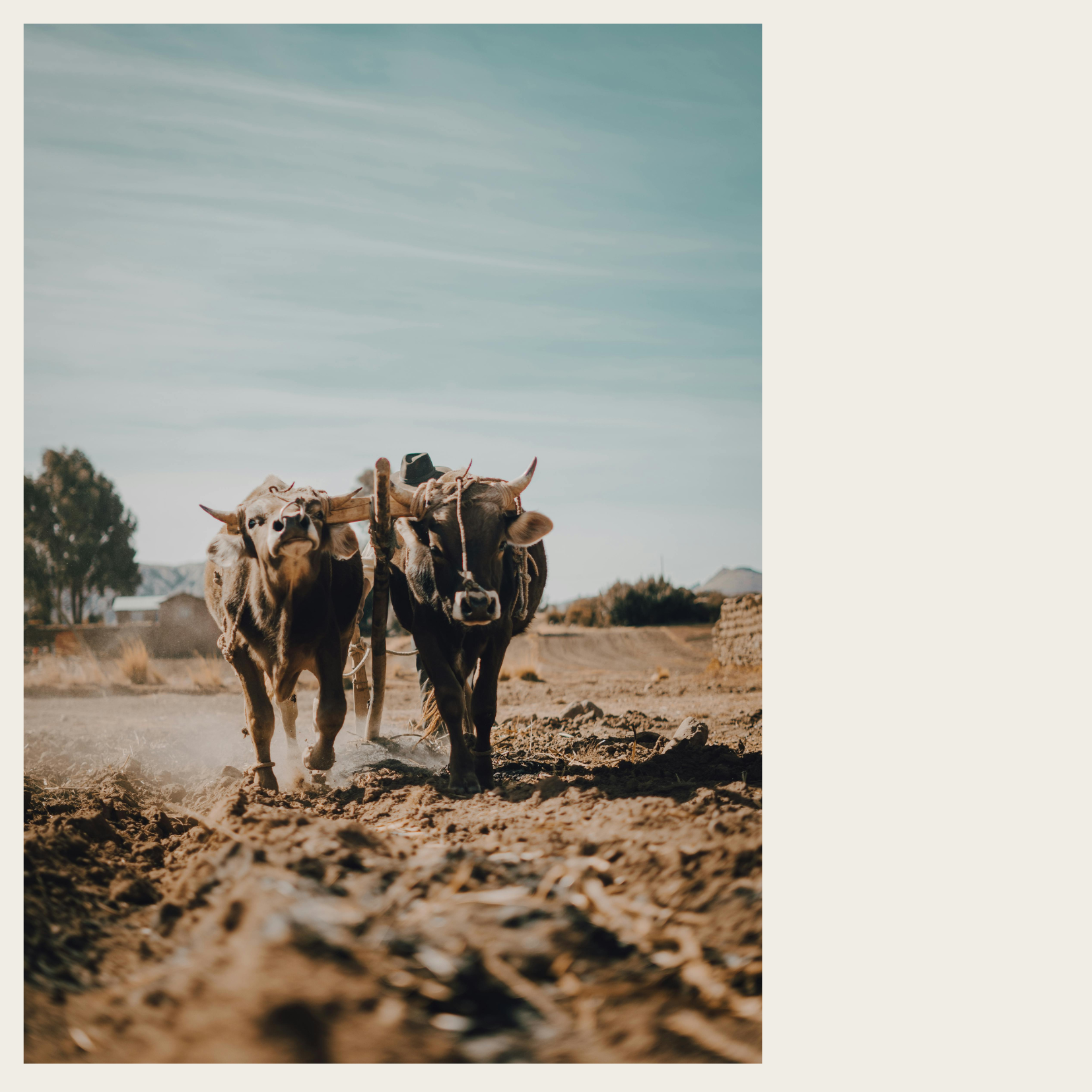
A yoke is the carpentered beam laid across the necks of a pair of oxen, and behind them runs the plough, with the blade that cuts the soil. The blade goes down into the earth, the earth pushes back, and that resistance travels up the beam and settles on the shoulders of the animal. The burden rises out of the ground and is felt above, on the back. But there is a second place where the animal meets the ground: the feet. The ox pushes its foot down, and the earth pushes back, and that push is the only reason it can move forward at all. Strength becomes power only when it is braced against the ground. So the same earth stands at both ends of this animal. Under the blade it is the burden. Under the foot it is the strength. The land that presses you down is the very land that holds you up.
The one who is torn from the land loses far more than a weight. They lose the thing they push against. They lose their footing. You can only pull because you are planted. Take away the ground, and you take away not the burden but the leverage.
And it is exactly here that Jesus describes himself. Hart says, “I am gentle and accommodating in heart.” Accommodating, because the Greek word underneath it, tapeinos, means low, close to the ground. To accommodate someone is to lower yourself to make room, so that another can be carried. So the one who comes under the yoke beside you is the one with his feet most surely on the earth, and the one most willing to bend. He accommodates himself to you, and he pulls.
For a yoke is made for two. He does not say there is no burden. He calls it what it is, a yoke, a burden, and he does not promise a life without labour. What he says is that the yoke is mild and the burden light. The word behind “mild” is chrēstos, kindly, well-suited, a yoke measured to the body so that it does not gall. And this is his own yoke that he asks you to share. He is under it too, carrying it beside you, taking the heavier share. That is why it is light: not because there is nothing to carry, but because you are not the only one carrying it.
Rest that reaches the breath
And what does he promise? “You will find rest for your souls.”
My ears have been trained to hear that as something small and private, a quiet feeling inside. It is far larger than that. The word behind “soul” is the Hebrew נֶפֶשׁ (nephesh), and its Arabic cousin نَفْس (nafs), and it never meant some faint, bodiless spirit tucked away from us. It means the throat, the appetite, the life, the whole breathing self. And in Arabic that same root breathes out the word نَفَس (nafas), breath itself. To rest the nephesh is to let the whole living, breathing self be caught back into breath.
There is a word among us for what that breath can carry. Nafas. The Palestinian food writer Reem Kassis once gathered the stories of grandmothers across our region, in Aleppo and Amman, and in Isfiya in the Galilee, women known for their cooking, and asked what makes their food taste the way it does. The answer they kept giving was nafas. It translates, roughly, as breath, or spirit, but in a kitchen it means the thing the cook gives to the food that no recipe can hold: the patience with it, the love of it, and above all the desire to feed the ones you love. It is knowledge held in the body, the knowing that comes only through years of doing.
Which is to say: nafas is the knowledge of the little ones. It is precisely what is hidden from the wise and revealed to the grandmothers. It is Wisdom, vindicated by her works, breathing herself into what she sets before you. And it is the very thing Jesus reaches for at the end of this passage, when he promises rest for the nafs.
And there is an old and holy name for this rest, the deepest name there is. It is Sabbath. It was never a private mood, and never only for people. It was for the land, and the labouring animal, and the household, and the stranger. Even the ox shall rest, the text says. Even the servant. Even the foreigner in your gates. So that all of them may be re-souled, caught back into breath. And Sabbath reaches further still, into the year the people called jubilee, when debts were forgiven, land that families had lost was returned to them, and the fields themselves were laid down to rest. That is the rest Jesus offers, and it reaches all the way down, from the aching shoulder to the breath beneath it. In an economy that presses the breath out of a whole people, he offers to give the breath back. You know what it is to speak of breath in these days, to long for a people to be allowed to breathe. The نَفَس returned to the breathless.
So we come back to where we began, to the market at the very heart of the town, where Wisdom still cries out and sets her table. A market, at its best, is for one thing: to feed people; and nafas is the love that makes food nourish past anything a scale can weigh. That is what he sets before a tired people, himself, breathed into the hungry, rest that reaches the breath. And he calls us into the same shape: to come down close to the ground, to be yoked to him and to one another, to set the table in the square where Wisdom cries, and to feed one another, body and breath, until every nafs, in Gaza, and here, and everywhere, is given back its rest.